A Pipe Just Burst in Your Chicago Home: Here's Exactly What to Do
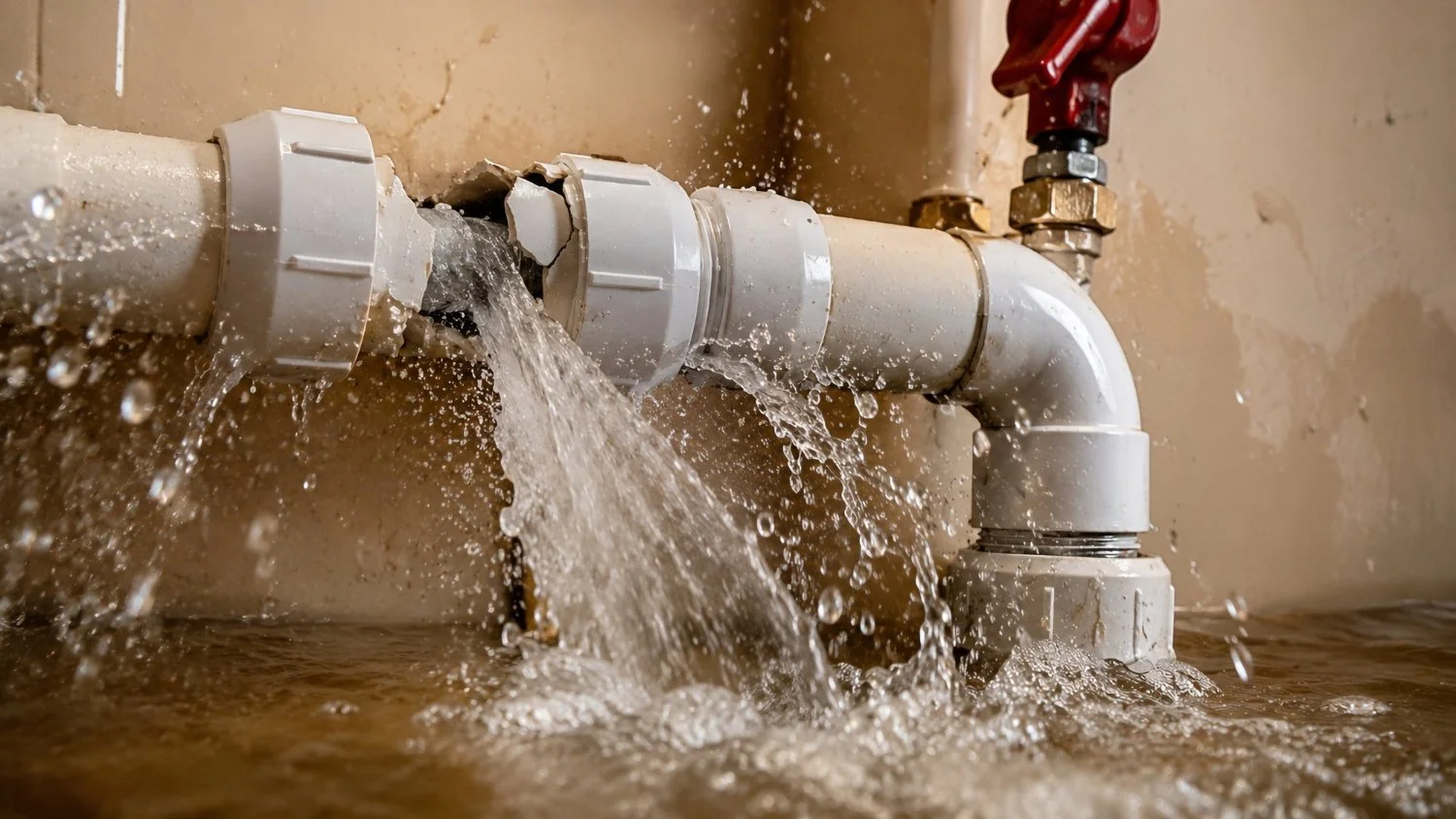
Shut off the water first. Read the rest after.
Your main shutoff valve is usually in the basement, near the front wall of the house where the city line comes in, often close to the water meter. Turn it clockwise until it stops. If you're in a two-flat or a small apartment building and can't find it, check the utility room or the space under the front stairs. That single move is the difference between a wet floor and a ruined one.
Okay. Now let's talk through the rest of it calmly.
The First Ten Minutes Matter Most
Water damage compounds fast, and most of what it costs you is decided before a plumber ever pulls up. Work in this order:
Kill the water at the main. Clockwise. All the way.
Open the lowest faucet in the house — usually a basement or first-floor tap. This drains the pressure still sitting in your pipes so the leak slows down.
Stay away from standing water near outlets, appliances, or the electrical panel. If water is anywhere near your panel or a live circuit, don't wade in. Shut the power off at the breaker only if you can reach it while standing somewhere dry. Otherwise, wait for help.
If it's a hot-water line, shut off the water heater too. Gas units have a dial you can turn to "off" or "pilot." Electric units get shut down at the breaker.
Move what you can. Boxes off the basement floor, rugs up, furniture away from the wet zone.
Take photos and a short video before you clean up. Your insurance adjuster will want them, and you will not want to recreate the scene from memory later.
Call a licensed plumber. Ours is (312) 278-7900, answered around the clock.
Then start moving air. Fans, a dehumidifier if you own one, windows open if the weather cooperates. Mold gets going in a day or two, not a week.
Why Pipes Burst Around Here Specifically
Chicago plumbing fails in patterns, and knowing the pattern tells you a lot about what you're dealing with.
Freeze-thaw cycles. Our winters don't just get cold, they get cold and then briefly warm and then cold again. Water in an uninsulated pipe along an exterior wall, in a crawlspace, or in an unheated garage expands as it freezes and splits the pipe. The rupture often shows up during the thaw, not the freeze, which is why people get blindsided on a mild February afternoon.
Galvanized steel reaching the end of its life. If your home went up between the 1920s and the 1950s — think bungalows on the Northwest Side, two-flats in Logan Square, cottages in Berwyn and Cicero — there's a real chance some original galvanized supply pipe is still in the walls. It corrodes from the inside out. By the time it fails, it had been thinning for years.
Water pressure that's too high. Anything above roughly 80 psi puts constant strain on every joint, valve, and appliance hose in the house. A pressure-reducing valve is a cheap fix for an expensive risk.
Old appliance supply lines. Rubber washing machine hoses and braided ice-maker lines are a leading cause of catastrophic indoor flooding, and almost nobody thinks to replace them. If yours are more than five years old, swap them for braided stainless. It's a twenty-dollar afternoon.
What to Expect When We Arrive
We locate the failure, isolate that section so we can restore water to the rest of your house whenever possible, and quote the repair before we touch it. Sometimes it's a single coupling. Sometimes it's a sign that a whole run of galvanized needs to go. We'll tell you which one you're looking at and what each path costs, and we won't pretend the bigger job is the only option when it isn't.
If the damage needs a restoration crew, we'll say so. Plumbers fix plumbing; drying out a finished basement is somebody else's specialty, and you deserve to know the difference.
How to Keep It From Happening Again
Insulate any pipe running through an unheated space — garage, crawlspace, exterior wall cavity.
On nights below about 20°F, let a faucet on your coldest wall drip. Moving water is much harder to freeze.
Open cabinet doors under sinks on exterior walls so heated air reaches the pipes.
Disconnect and drain garden hoses before the first hard freeze. A hose left attached traps water in the spigot.
Replace washing machine and ice-maker lines on a schedule, not after a failure.
Know where your main shutoff is before you need it. Show everyone in the house. Today, ideally.
Frequently Asked Questions
-
Shut off your home's main water valve, then open the lowest faucet in the house to drain remaining pressure. After that, avoid standing water near electrical outlets and call a licensed plumber.
-
In most Chicago-area homes it's in the basement near the front foundation wall, close to the water meter. In condos and small apartment buildings, check the utility room or the area beneath the front stairs.
-
Sudden, accidental water damage from a burst pipe is typically covered, while damage from long-term neglected leaks often isn't. Photograph everything before cleanup and call your carrier early. We're glad to provide documentation of the repair.
-
A pipe clamp or repair tape can slow a small leak temporarily, but it's a stopgap, not a repair. The water needs to stay off until a licensed plumber replaces the failed section properly.
-
It depends entirely on the location and the pipe material — an accessible basement joint is a very different job than a line inside a finished wall. We diagnose on site and quote the work before starting, so you approve the number first.
-
We prioritize emergency calls and aim to dispatch same-day, often within hours, throughout Chicago and the surrounding suburbs including Oak Park, La Grange, Naperville, Evanston, and Orland Park.
-
No. Plenty freeze, block, and thaw without splitting. But a frozen pipe is a warning that the conditions for a burst exist, and it's worth having that spot insulated or rerouted before next winter.
Water Still Running? Call Now.
If this is happening right now, stop reading and dial.
(312) 278-7900 — The Plumb Squad, 24/7 emergency plumbing across Chicago and select western suburbs, including Elmhurst, Hinsdale, La Grange, Downers Grove, Clarendon Hills, Western Springs, Glen Ellyn, Oak Park, River Forest, and Lemont. If it's not urgent but something's been nagging at you, reach out here, and we'll take a look.